What does an ADHD shutdown feel like?
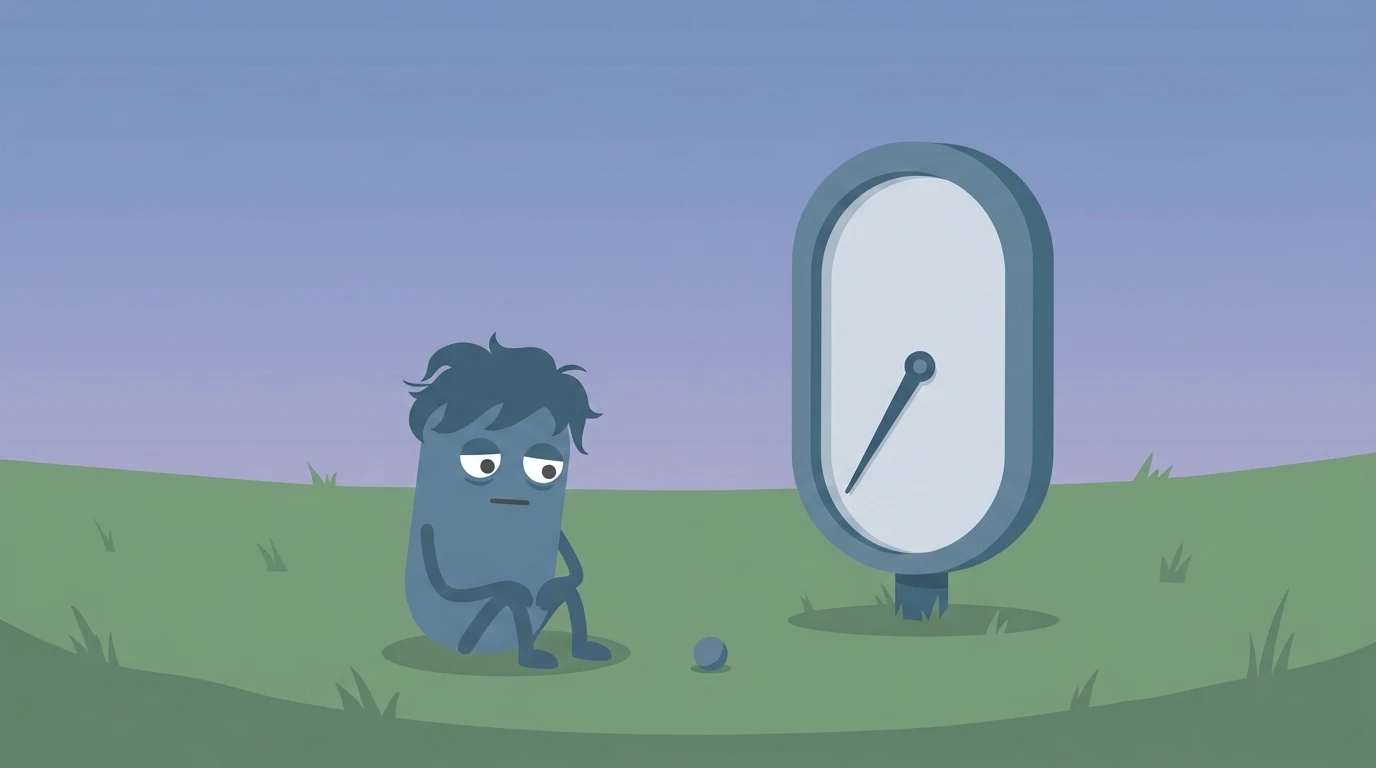
From the inside, it feels like the volume on your own agency got turned down. Common descriptions include:
• Words forming in your head but not making it to your mouth.
• A heavy, sudden fatigue that has nothing to do with how much sleep you got.
• Wanting to move or respond and finding that your body just will not.
• A flat, foggy disconnection from what is happening around you.
• Relief mixed with dread: relief that the demands have stopped registering, dread about what you're not getting done.
None of this is you checking out on purpose. It is what happens when the part of your brain responsible for directing action toward a goal, what Barkley calls executive functioning, temporarily stops being able to do its job.
How long does ADHD shutdown last?
Most shutdowns resolve in one to a few hours once the triggering demand eases. A harder one, especially after a big blowup or several stacked overload days, can run into the next day. Shutdowns lasting for weeks are unusual and are more often a sign of something else layered on top, like depression or ongoing burnout, rather than a single shutdown that never lifted.
The clock does not really start running until the input stops. If you're still in a loud environment, still masking in a meeting, or still mid-argument, the shutdown holds. Recovery time is really the time it takes your resource pool to refill once the draining stops.
How is an ADHD shutdown different from ADHD paralysis?
The two get used interchangeably online, but they describe different things. ADHD paralysis is usually about a specific task: you cannot make yourself start the email, the assignment, the phone call, even though nothing is stopping you physically. A shutdown is broader and more acute. It is a whole-system response to overload that leaves you unable to engage with much of anything for a stretch of time, not stuck on one particular task.
What's the difference between an ADHD shutdown and burnout?
Shutdown and burnout sit on the same spectrum but at different timescales. A shutdown is the acute event: hours to a couple of days, triggered by a specific overload, and it lifts once your resource pool refills. Burnout is the accumulated state you land in when shutdowns, or the conditions that cause them, keep repeating without enough recovery in between.
A study of 171 employees found that adults with ADHD reported significantly higher job burnout than colleagues without ADHD, and that this gap was explained by deficits in executive function, specifically self-management of time and self-organization. Physical fatigue was linked to difficulty managing time, while emotional exhaustion and cognitive weariness tracked with difficulty organizing and solving problems. In other words, the same resource-depletion mechanism behind a single shutdown, run on a loop at work, is what produces burnout over months.
How do you get out of an ADHD shutdown?
You cannot think your way out of a shutdown, because thinking is part of what just ran out. What actually helps is reducing input and letting the resource pool refill:
• Remove yourself from the trigger if you can. Leave the loud room, step out of the conversation, close the tab.
• Lower every demand you can, even briefly. Cancel what's cancelable. Text "give me twenty minutes" instead of pushing through.
• Do the boring physical basics. Water, a few bites of food, sitting or lying down somewhere quiet. Barkley's research on self-regulation lists physical rest, routine exercise, and even glucose as factors that help replenish the depleted resource pool.
• Wait it out rather than forcing engagement. Trying to power through often extends the shutdown, because it keeps drawing on a pool that is already at zero.
• Return to demands gradually, starting with the smallest one, once you notice speech and movement coming back online.
How do you manage ADHD shutdown in relationships?
A shutdown in the middle of a conflict looks, to a partner, like stonewalling or shutting them out. It usually is not. It is the nervous system's overload response arriving mid-argument, which is precisely when demand on self-regulation is highest.
Naming it before it happens helps more than explaining it during. Agree in advance on a signal that means "I need to pause, not because I don't care, but because I've hit my limit." A short, planned break that both people understand protects the relationship in a way that pushing through a shutdown never does.
Why do masking and shutdown go together?
Masking, suppressing visible ADHD traits like fidgeting, interrupting, or losing your train of thought, to look composed in front of other people, is expensive. Research on the invisible side of adult ADHD describes this as an effort-to-output imbalance: from the outside, a masked adult looks fine, while internally they are spending far more energy than anyone can see just to maintain that appearance, often left with chronic fatigue and a "secret" internal reality that others struggle to believe.
That hidden cost draws directly on the same resource pool a shutdown depletes. A day spent successfully masking in a meeting, a classroom, or a family gathering can leave you with nothing left over, so the shutdown that follows is not really about that one triggering moment. It's the bill coming due for everything you held together beforehand.
Building in recovery before the next one
Shutdowns are easier to prevent than to shorten once they start. That means treating masking, sensory load, and stacked deadlines as real withdrawals from a real account, not personal failings to push past. Building in recovery time after high-effort days, rather than only after a full shutdown forces the issue, keeps the account from ever hitting zero. A daily plan that schedules that recovery time as its own event, the way GetMotivated.ai's habit scheduling does, makes it far more likely the withdrawal actually gets repaid instead of quietly rolling over into tomorrow's balance.
The next time you feel the early signs, the words slowing, the fog creeping in, that is your signal to pull back before the system runs out entirely. Catching it there, rather than after, is what turns a pattern of shutdowns into a manageable rhythm you're back in control of.